Use Azure AD as your Authentication Provider
This guide will walk you through the steps necessary to configure Azure Active Directory as the authentication provider for Okteto.
Azure's OpenID Connect documentation has more details.
Prerequisites
- A working installation of Okteto
- Helm 3.0+ installed on your local machine
- Access to an Azure account with permissions to register applications in Azure Active Directory
Create an App Registration
Create a new app integration, using the values below:
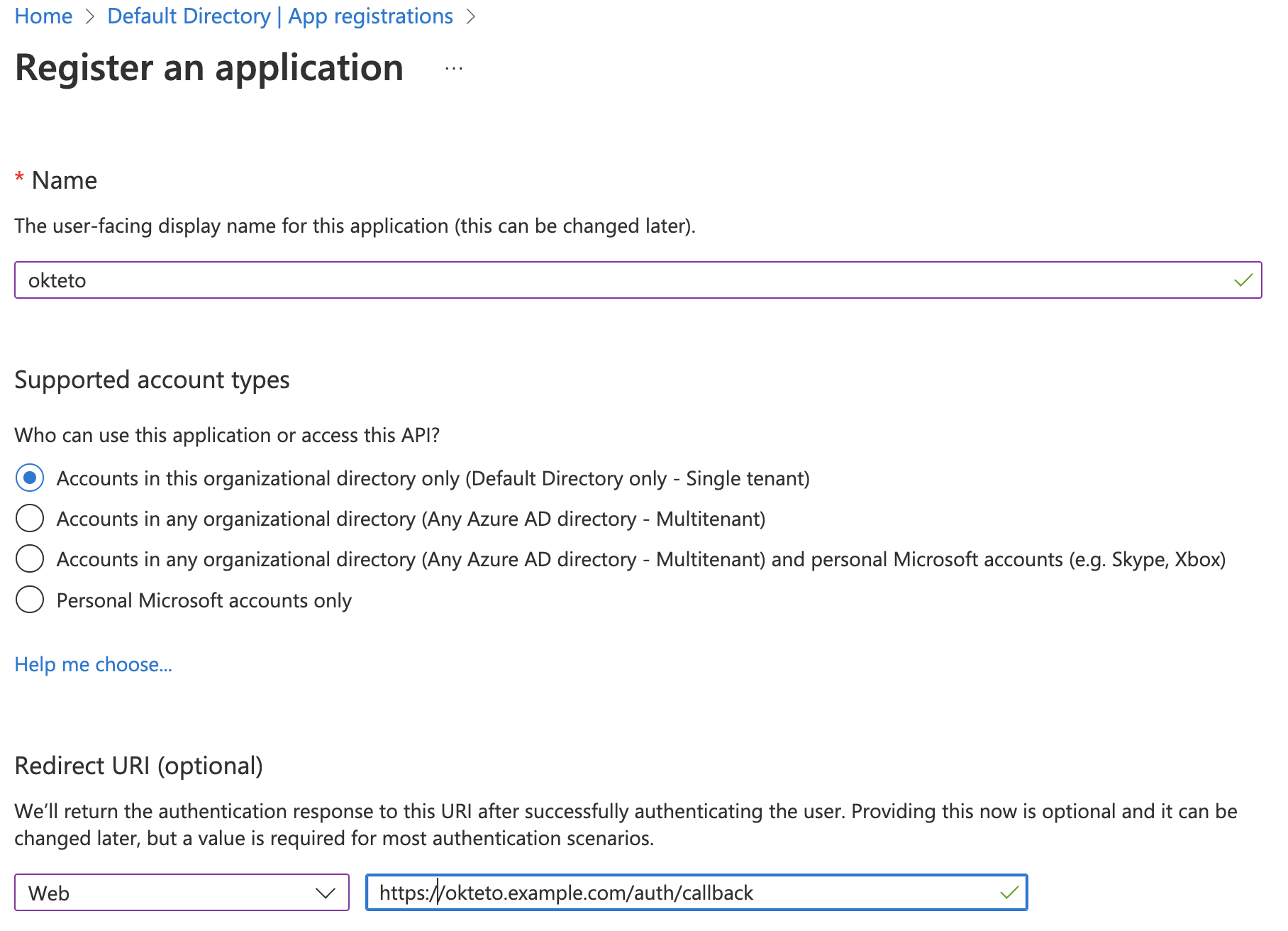
Fill in the following values in the Register an application window:
- Name: The name of your application (e.g.
okteto) - Accounts in this organizational directory only (Default Directory only - Single tenant)
- Redirect URI: https://okteto.{YOUR_DOMAIN}/auth/callback
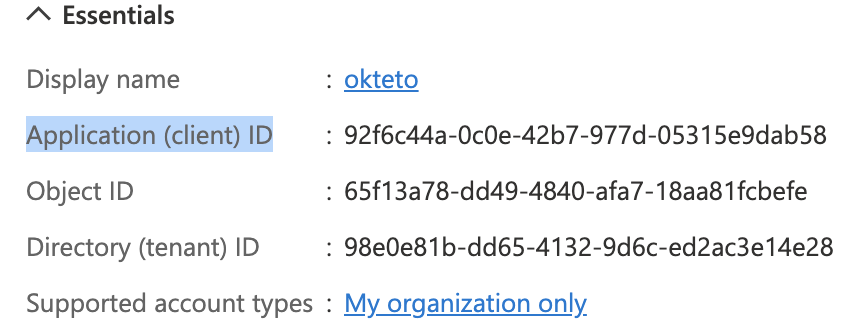
After you create the application, save the Application (client) ID value. You need it to configure Okteto.
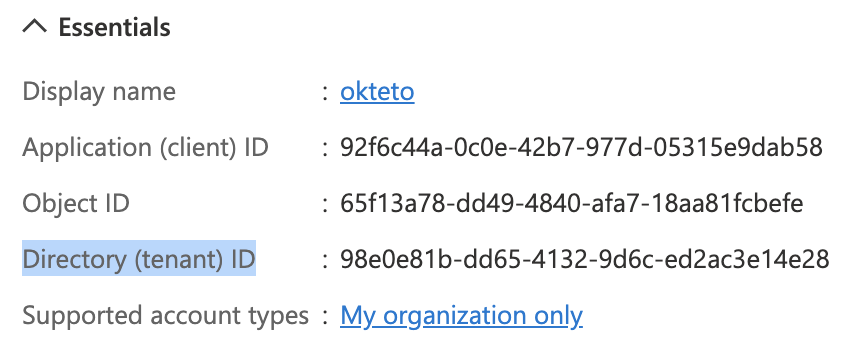
Copy the Directory (tenant) ID value. You need it to configure Okteto.
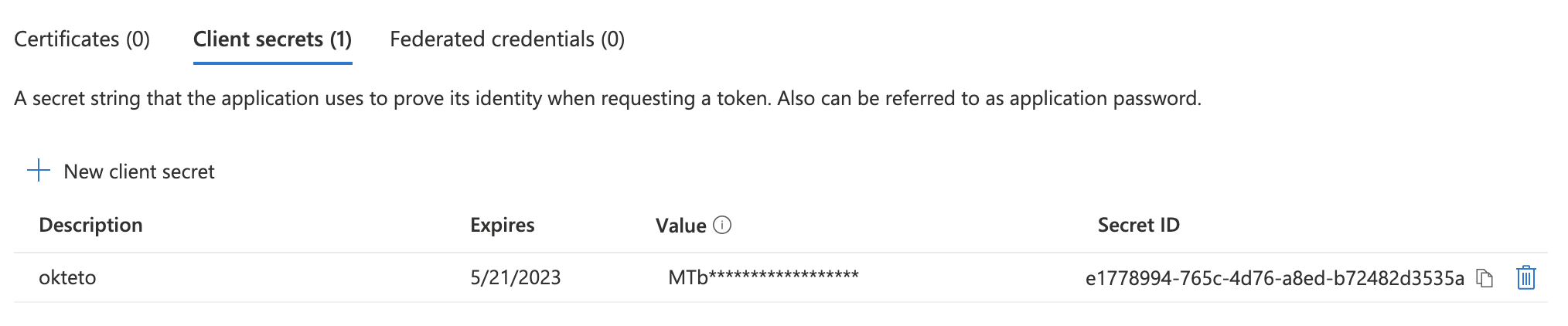
In the left menu, click Certificates & secrets. Create a New client secret and copy its Value. You need it to configure Okteto.
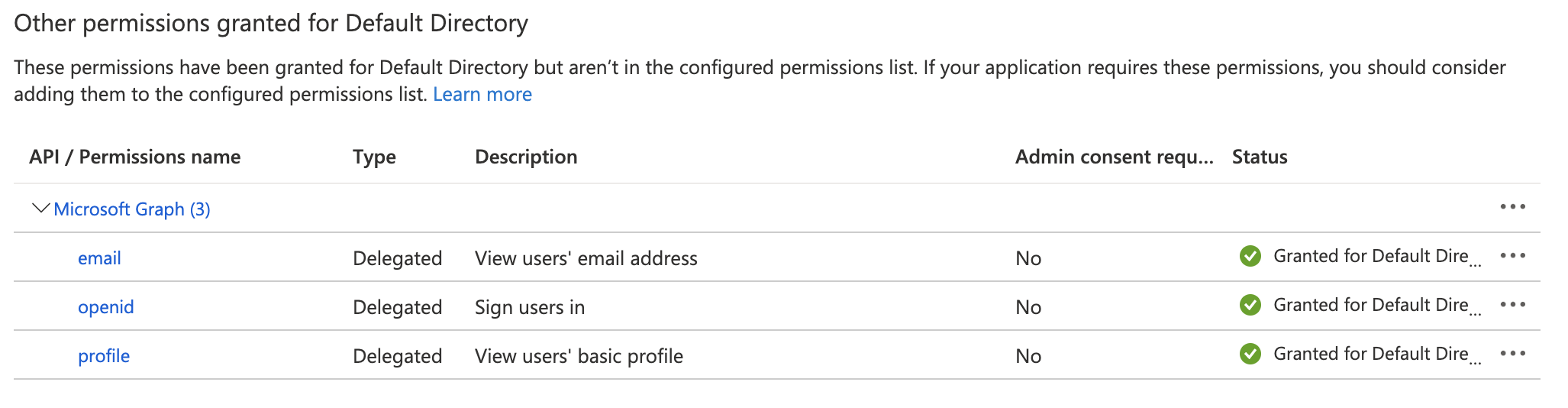
In the left menu, click API permissions and grant the following permissions:
Configure Okteto
When the app registration is ready, update the auth section of your Okteto Helm configuration file with the values you copied in Create an App Registration:
auth:
  openid:
    enabled: true
    clientId: $CLIENT_ID
    clientSecret: $CLIENT_SECRET
    endpoints:
      issuer: https://sts.windows.net/$TENANT_ID/
      authorization: https://login.microsoftonline.com/$TENANT_ID/oauth2/v2.0/authorize
    mapping:
      externalIDKey: email
You can also store the
clientSecretvalue in a Kubernetes secret.
Upgrade your Okteto instance to apply the new configuration. Upgrade to the same version you already run: it keeps the changes to a minimum and makes any issue easier to troubleshoot.
After the upgrade completes, open your Okteto instance and click Log In. If the configuration is correct, Okteto authenticates users with your Azure Active Directory.
Customize the attributes that Okteto consumes
By default, Okteto will use the following attributes below when creating a user:
Nameas the user's display name.Nicknameas the user's username.Emailas the email. Addresses must contain only lowercase alphanumeric characters, '-', or '.'Picture URLfor the user's profile picture.
If you don't use some of those values, or you want to change which attributes Okteto maps, set the mapping field inside the openid key in your Helm configuration file.
auth:
  openid:
    enabled: true
    clientId: $CLIENT_ID
    clientSecret: $CLIENT_SECRET
    endpoints:
      issuer: https://sts.windows.net/$TENANT_ID/
      authorization: https://login.microsoftonline.com/$TENANT_ID/oauth2/v2.0/authorize
    mapping:
      externalIDKey: nickname
      nameKey: name
      emailKey: email
      pictureKey: picture
The value of every key in the mapping section must match a claim in your Azure Active Directory + OpenID configuration, and it must contain a non-empty value.
Microsoft Entra issues a pairwise sub claim that differs per application registration. Set subjectKey to oid in the mapping section so that each user binds to a claim that stays stable across registrations. User identity binding explains how the subject claim binds a user to their provider account, and why you decide it before your first rollout.