Total Cost of Ownership (TCO) of Building Versus Buying a Development Platform

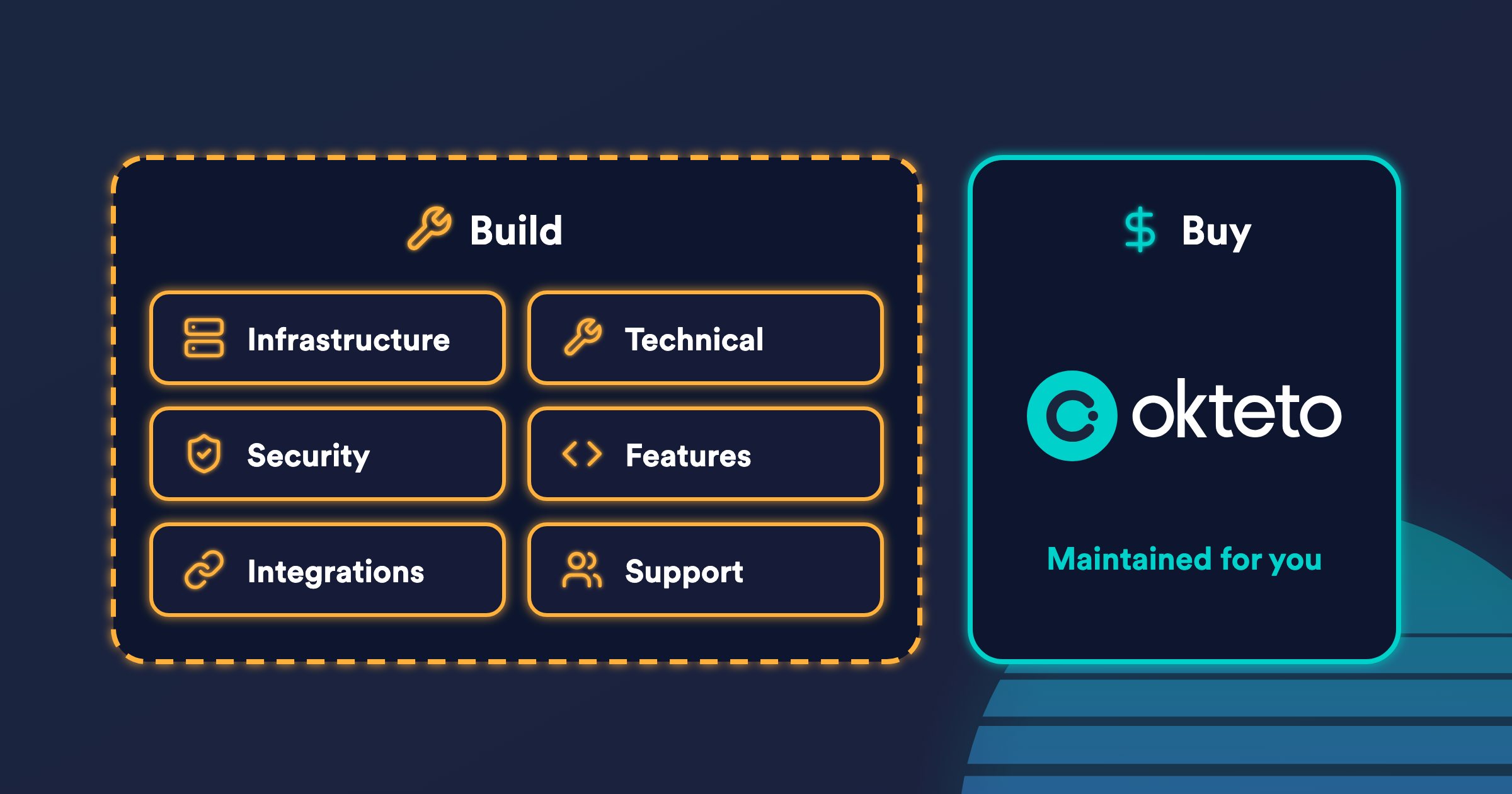
6 Maintenance Requirements of In-house Software Development
Building an in-house development platform can provide several benefits, such as customizability, better control over the development process, and increased efficiency (at least initially). But when looking at the bigger business picture —i.e., the total cost of ownership (TCO) of building software in-house — companies often experience sticker shock when they realize how much they've spent. Specifically, the costly ongoing maintenance of building an in-house development platform is always an unpleasant surprise.
TCO is the total cost of owning software over its entire lifecycle, including the initial building price and ongoing charges, such as maintenance, human capital investments, resource allocation, and opportunity costs.
AI coding agents have made the first part much cheaper: an agent can build a working first version of a development platform in days. But building was never the most expensive part. Maintaining the platform is, and AI doesn't change that: someone still has to upgrade it, keep it running, and fix it when it breaks.
Opportunity cost is what you give up when you choose to build a platform with features that very well could be obsolete in a few months.
If you build, you bear the entire cost burden of homegrown software. That includes paying for the initial buildout, ongoing support, bug fixes, upgrades, platform migrations, and keeping up with software industry trends. Mucking around with these complex technical challenges means that your developers aren't developing - they're administering.
Opportunity costs of building are a time-monopolizing buzzkill for developers whose time is now stuck maintaining the platform instead of innovating and delivering value. Making matters worse is that unhappy engineers often leave a company.
Let's look at the six unforeseen maintenance costs that come with building an in-house development platform:
1. Infrastructure architecture maintenance
To build an in-house development platform, you must set up and maintain the infrastructure required for development, such as clusters, registries, storage, and networking. This infrastructure requires ongoing maintenance, upgrades, and replacements, which can be costly.
- Pro Tip: Ask if you or a vendor can keep up with maintenance and regular updates for new features and functionality to provide unparalleled speed, reliability, and scalability. A first-class architecture offers several layers of redundancy and ensures consistency and enterprise-ready security with every update.
2. Technical maintenance
The in-house development platform must be compatible with various tools, frameworks, and programming languages. Maintaining and updating these technologies can be a significant cost driver.
- Pro Tip: Ask if your platform works with your existing Helm charts, Docker Compose files, or Kubernetes manifests.
3. Security maintenance
Developing an in-house development platform means you are responsible for ensuring its security. Maintenance includes upgrades to access controls, data encryption, and security testing.
- Pro Tip: Ask if your solution is secure enough to support SOC 2 or ISO 27001, and can it effectively protect PII, or can it cross borders for GDPR compliance? If you say no to any of these questions, then consider the cost of a potential security breach. Don’t lose sleep.
4. Feature customization maintenance
One of the benefits of building an in-house development platform is customizability. However, the total cost of ownership (TCO) of software customizations can require ongoing maintenance, especially when updating or upgrading the platform.
- Pro Tip: And will the customized features you build today be out-of-date tomorrow? And what features will you need in the future?
5. Integration maintenance
Your in-house development platform must integrate with other systems, such as databases, applications, and APIs. The TCO of maintaining these software integrations can be complex and require ongoing effort and cost.
- Pro Tip: How much time and resources are needed to increase collaboration with the DevOps teams to ensure the end-to-end platform executes?
6. Reliability and support
A development platform sits on the critical path of every engineer, and now of every coding agent too. If it goes down, or builds and deployments start failing, the whole company stops shipping. Keeping it resilient takes monitoring, on-call rotations, incident response, documentation, and a support team that helps developers when something doesn't work.
- Pro Tip: Ask who is on call when the platform fails, and how many engineers it takes to support every developer and agent that depends on it.
The Benefits of Outsourcing a Software Development Platform
Planning and budgeting for ongoing maintenance, updates, and upgrades are essential to mitigate building costs. But increasingly, companies realize that the potential risks of building an in-house development platform aren't worth it.
Buying a development platform that is already built and tested can make it easier to scale your operations as your business grows, and you'll gain access to the expertise of the platform's developers and support staff. This can help you troubleshoot issues, optimize your platform use, and get the most value from your investment. This expertise can also help you stay updated with the latest trends and best practices in cloud development.
What's the cost of not knowing what you don't know? For example, can your platform run hundreds of environments for developers and coding agents at the same time? Can it provide easy access to Kubernetes? These are questions some of the most innovative development organizations forget to ask when going down the build path.
Ultimately, the TCO of building a software development platform is like the iceberg that sank the Titanic. From the horizon, it looks harmless until you look under the water and realize that the TCO of building a development platform is costly enough to sink your boat.